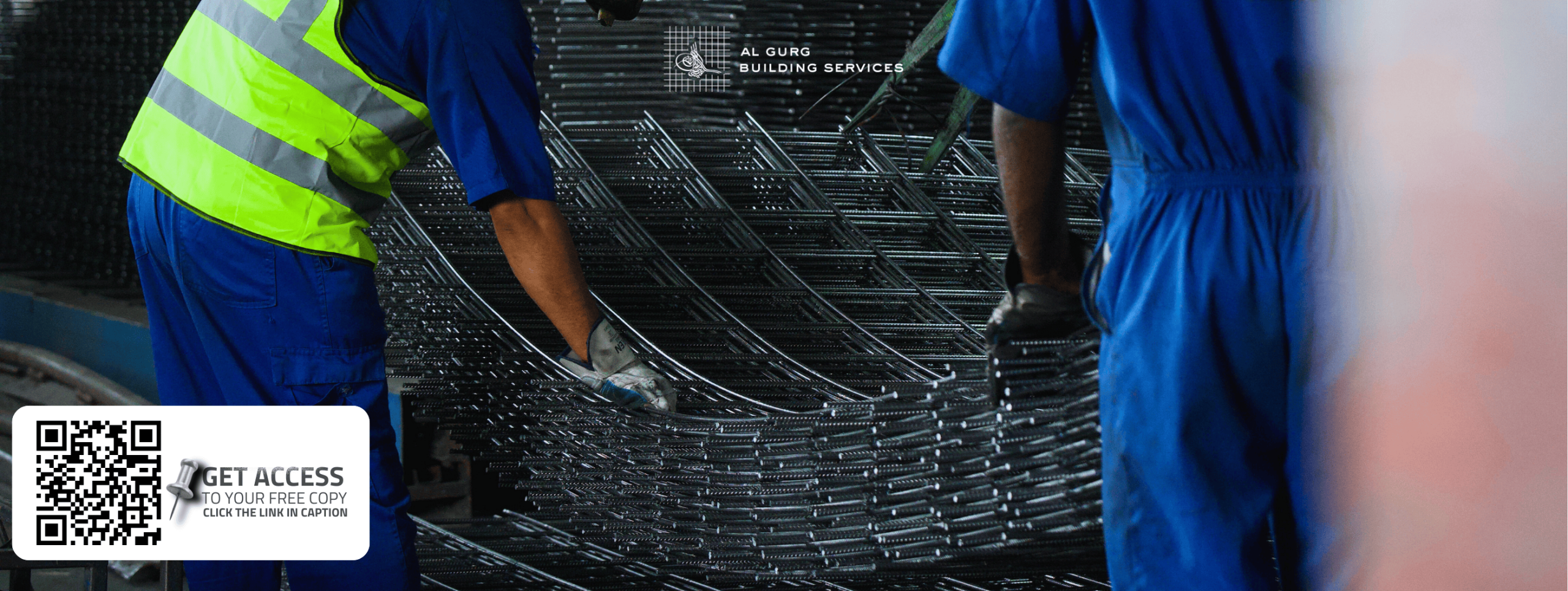
In the UAE, construction sites constantly face heat, humidity, dust, and coastal salt exposure. Because of this environment, reinforcement steel (rebar) may show surface discoloration during storage, transportation, or handling. But the question is,
Which discoloration is acceptable and which is a warning sign?
Understanding this helps ensure structures remain strong and safe for decades. At AGBS, we manufactured and handled reinforcement steel in line with UAE project requirements, helping customers avoid long-term durability issues from the start.
Why does discoloration happen?
Steel naturally reacts to its surroundings:
- Humidity and rainfall
- Coastal air with chloride exposure
- Dust and airborne chemicals
- Handling, storage, and transportation conditions
Even epoxy-coated and galvanized rebars can display slight shade changes due to production and curing variations. These color differences doesn’t mean the steel is damaged.
AGBS follows controlled & super-wised supply processes to protect bars from unnecessary exposure while ensuring compliance with UAE durability specifications.
Acceptable discoloration
Some types of discoloration do not harm the steel or the bonding with concrete.
- Uniform light rusting:
A thin, adherent, and uniform oxide film (light rust) that forms naturally during storage or handling is acceptable. This type of oxidation often increases surface roughness, enhancing the mechanical interlock and bond strength between steel and concrete.
- Normal color variation in coatings:
Epoxy-coated or galvanized bars may exhibit color variations (from light green to dark green for epoxy, or dull gray to shiny silver for zinc). These variations occur due to curing temperature differences, film thickness variation, or zinc oxidation stages, and are not indicative of coating failure as long as continuity and adhesion are maintained.
- Handling marks and stains:
Minor surface marks, scuffs, or dirt stains that do not penetrate the coating or oxide layer are acceptable. These superficial imperfections typically result from transport, bundling, or site handling and have no structural effect.
- Galvanized bar white deposits:
A soft, powdery white substance known as white rust (zinc hydroxide) can form on galvanized bars exposed to moisture during storage. This is a light zinc oxidation product and does not indicate deep corrosion unless it becomes compact, crusty, or associated with dark gray corrosion spots, which would suggest underlying steel exposure.
If discoloration or deposits can be removed by light brushing or wiping, leaving a sound surface underneath, the bar remains acceptable for use without additional cleaning or coating.
Non-Acceptable Discoloration
Some discoloration is a sign of serious corrosion. These must not be used in concrete unless repaired or replaced:
- Heavy rust or scale formation:
Deep reddish-brown rust with loose, flaky, or scaly texture indicates ongoing corrosion. This leads to sectional loss, reduction in effective diameter, and deterioration of mechanical properties (tensile strength and ductility).
- Pitting corrosion:
Localized pits or cavities represent anodic attack on the steel surface, leading to concentrated material loss and potential stress risers. Such bars may fail prematurely under load and must not be used.
- Coating discontinuity or damage:
For epoxy-coated or galvanized reinforcement, exposed bare steel, cracks in the coating are unacceptable. These defects allow accelerated corrosion under chloride or alkaline exposure and invalidate coating protection.
- Surface contamination:
Presence of oil, grease, lubricants, or paint residues interferes with the chemical adhesion between steel and cement paste. Any contaminant that reduces surface energy or prevents proper wetting of the bar surface renders the reinforcement non-compliant.
- Chalking, blistering, or peeling of coatings:
Such defects indicate UV degradation, chemical attack, or improper curing of protective layers. Loss of coating integrity exposes steel to environmental corrosion, disqualifying the bar unless re-coated and verified.
If discoloration shows deep damage, loose metal, or visible coating breaks, it is not acceptable. AGBS provides consistent quality assured reinforcement steel that comply with ECAS and DCL for international standards such as ISO and BS.
Why Is This So Important in the UAE?
Reinforcement steel is the main strength and support system inside every concrete element. It carries loads, absorbs stress, and keeps buildings safe for decades. When the steel surface is damaged (especially before concrete is poured) the issues may stay hidden at first, but they will eventually appear inside the structure, where maintenance becomes difficult and extremely costly.
In the UAE, structures are constantly exposed to harsh environmental conditions such as high humidity, marine salts, and aggressive chloride exposure-especially in coastal developments. Even small surface defects on reinforcement steel can rapidly turn into major durability problems once the building is in use.
If discoloration or corrosion is ignored at the start, it can lead to:
- Weak bonding between concrete and reinforcement steel
- Accelerated internal corrosion continuing after construction
- Cracks, water leakage, and concrete spalling
- Shorter service life and costly maintenance
- Potential safety concerns over time
That’s why proper inspection and acceptance decisions at the construction stage are critical to ensuring the durability and safety of the UAE’s advanced infrastructure.
How you can evaluate discoloration?
On-site checks typically confirm:
- Steel surface remains smooth
- No deep rust or loose scale
- Coating remains continuous with no exposed steel
- Rust can be brushed off easily
- Ribs/deformations remain clear and undamaged
Request supplier for compliance certificates such as ECAS / DCL product approvals in-order to evaluate the quality. As the first cold drawn steel producer to achieve ECAS and DCL certification in the UAE, we can proudly assist all our clients with the required documents which fasten their project approval proccess.
Not all discoloration is harmful-Choose the right steel to ensure long-term durability.
References
- ASTM A615 / A615M – Standard Specification for Deformed and Plain Carbon-Steel Bars for Concrete Reinforcement, clause 12 Finish, sub clause 12.2
- ASTM A767 / A767M – Standard Specification for Zinc-Coated (Galvanized) Steel Bars for Concrete Reinforcement, clause 6 Finish and Adherence of Coating
- ASTM A775/A775M- Standard Specification for Epoxy-Coated Steel Reinforcing Bars, clause 8 Requirements for Coated Steel Reinforcing Bars
Build with quality. Build with sustainability – Build with AGBS.